Sustainability in raw material extraction
Managing human interventions in nature and landscape
Latest Update: December 2025
EITI Standard:
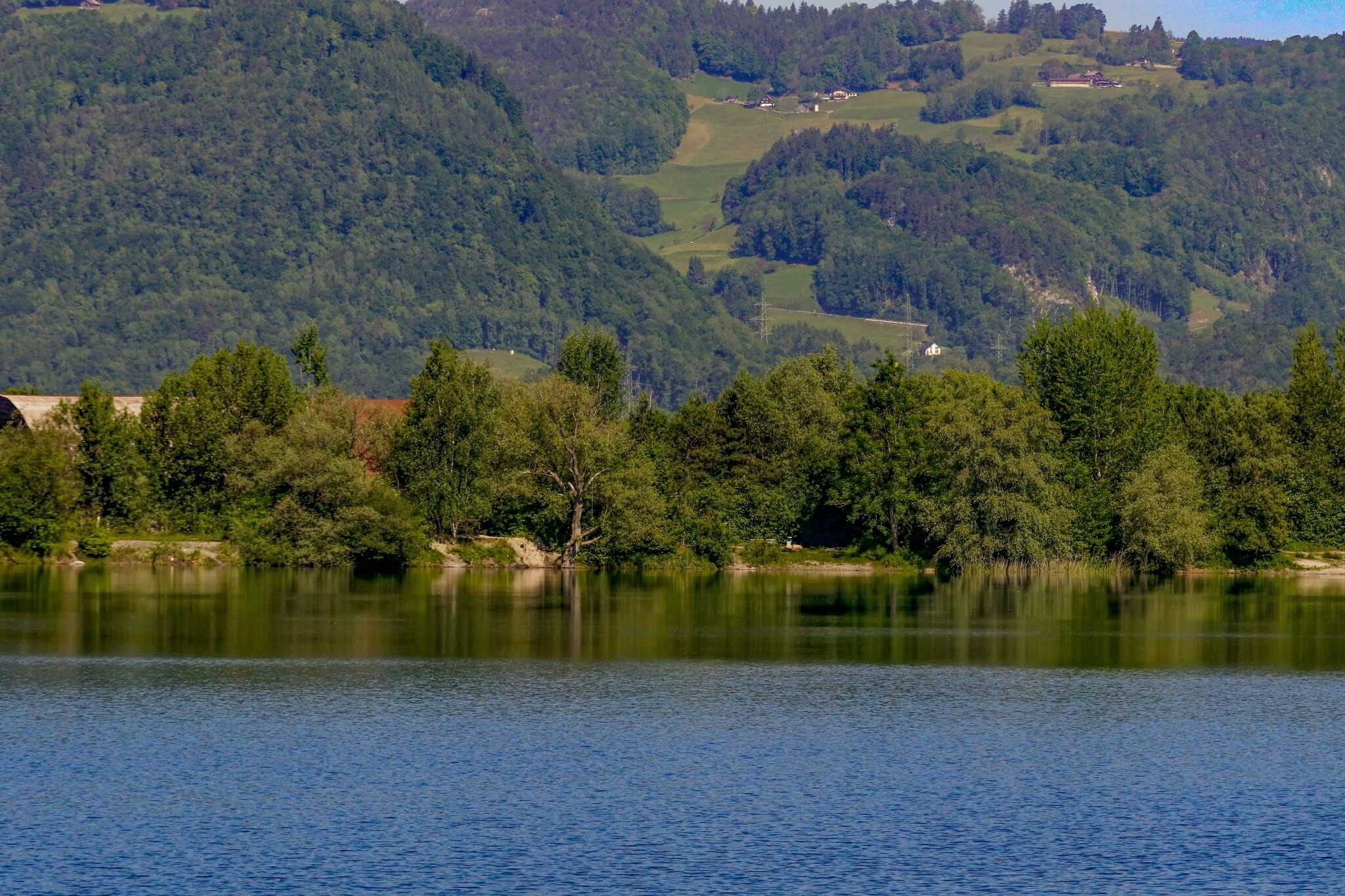
Rules of intervention under nature conservation law
Every mining activity is associated with interventions in nature and landscape and can result in serious environmental impacts. Compensatory actions, such as compensatory or substitution measures according to the Federal Nature Conservation Act (BNatSchG), are intended to offset interventions in nature and landscape and to restore or replace their impaired functions. Only if real compensation is not possible, compensatory payments are to be made, provided that the nature conservation interests are of secondary importance. The compensatory payment shall be earmarked for nature conservation and landscape conservation measures, preferably in the affected natural area.
Overall, it is estimated that just over 1% of Germany’s entire area will be necessary to ensure the country’s natural resources in the medium and long term. On the last key date of 31 December 2023, according to the Federal Office of Statistics, approx. 1285 km², i.e. approx. 0.36% of the area of Germany is used as mining land.1 In the last 31 years or so, the amount of land required for quarrying in Germany has therefore decreased by over 32% (593 km²). The equivalent in area for the volume of natural resources used in 2023 was just over 26.5 km². In relation to the total area of Germany (357,582 km²), this results in a temporary land requirement of approx. 0.007% of the country’s area for 2023.2 The areas used for the extraction of natural resources are concentrated in different regions, which means that there are significant differences in how strong the different regions are affected by the impacts on nature and landscape.
Legal framework
The Federal Mining Act (BbergG) requires the mining operator to take the necessary precautions to reclaim the surface to the extent required by the circumstances (Section 55 (1)(7) BBergG). The term “reclaiming” means proper shaping of the surface used by the mining operation, considering the public interest (Section 4 (4) BBergG). This term covers all activities required for recultivation, without the status quo ante having to be achieved. Within the scope of the obligation under mining law to rehabilitate the area, the obligation that simultaneously exists under nature conservation law to compensate for interventions in nature (Section 13 BNatSchG) may have already been met in the individual case – depending on type and scope of the measures taken for this purpose.3
The Federal Nature Conservation Act (BNatSchG) establishes the general principle that major interventions in nature and landscape are to be primarily avoided and minimised by the polluter (avoidance obligation). Unavoidable interventions are to be compensated by means of compensatory or substitution measures (hereinafter “compensatory measures”) or, if this is not possible, by a compensatory payment in money (Section 13 BNatSchG). It is not possible to deviate from this general principle and the ensuing legal consequences (first the avoidance, then compensatory measures and, as a last resort, a compensatory payment). In the case of mining measures, the avoidance rule primarily targets a variant that is as environmentally friendly as possible. Unavoidable interventions in nature and landscape must therefore be offset or mitigated, particularly through the promotion of natural succession, renaturation, near-natural design, rehabilitation, or recultivation (Section 1(5) p. 4 BNatSchG). Interventions are avoidable if there are reasonable alternatives to achieving the purpose of the intervention in the same place, without or with less impairment of nature and landscape (Section 15 BNatSchG).
Compensatory measures must be maintained and legally secured during the required period. The period of maintenance is determined by the approval authority in the certificate of approval. The perpetrator of the intervention (the polluter) or its legal successor is responsible for the execution, maintenance and safeguarding of the compensatory measures.
In accordance with German federal and European regulations, the possible effects of a project on particularly protected species of animals and plants (special species protection legislation) and on the European protected area network NATURA 2000 is one of the aspects that must be examined in the approval procedures for nature conservation law interventions.
The BNatSchG contains a full regulation, viz. that the laws and norms of the Federal States on the instrumental design of the intervention regulation may not contradict it. To make the regulation more applicable, some Federal States have made supplementary regulations, whereby the practice differs from Federal State to Federal State. For example, the concrete assessment of the amount and the use of compensatory payments differ from Federal State to Federal State. As different biotope type lists are used at Federal State level, the Federal Government produces conversion keys that allow the respective biotope types to be counted.4
The Federal Compensation Ordinance (BKompV) provides specific details of the rules of intervention intended under nature conservation law for projects in the area for which the Federal Administration is responsible. It covers public infrastructure projects (e. g. power lines and pipelines, offshore wind farms, waterway projects and usually also Federal autobahns). The objective of BKompV is to standardise the rules of intervention under nature conservation law across all Federal States and make them both more transparent and more effective. Different regulations continue to apply in some countries.5
Approval practices in the extraction of natural resources under nature conservation law
If a company plans to intervene in nature and landscape by extracting natural resources, the rules of intervention under nature conservation law are examined at the level of the responsible approval authority. Different laws may apply depending on the natural resource extracted. This depends on which authorities are responsible in a Federal State. A nature conservation authority may be responsible for the extraction of mineral resources that are not subject to mining law or water law (The nature conservation legislation of many Federal States includes specific procedures for extraction e.g. in Saxony-Anhalt6). In addition, the mining authorities of the Federal States (in the case of free-to-mine and privately-owned mineral resources or underground extraction) or the Federal State authorities responsible for enforcing the state excavation laws, the building and water management laws or the Federal Immission Control Act (in the case of so-called landowners’ natural resources) may also be involved.7 This procedure corresponds to the “piggyback procedure”: The rules of intervention are always examined within the framework of the notification and approval procedure under the specific legislation, without separate administration proceedings. The nature conservation authorities must be involved, and they will give their opinion as nature conservation experts. The responsible approval authority then grants the authorisation taking account of the opinion in “consultation” with the responsible nature conservation authorities (Section 17(1) BNatSchG).8 The responsible approval authority, which makes the decision on the legal consequences of the intervention, is not bound by the opinion of the nature conservation authorities that go beyond the legal requirements of the nature conservation laws and the recognised professional standards in nature and species conservation.
It is allowed to differ from these on objective grounds. It is compulsory to comply with the provisions of the specific species protection independently of the rules of intervention. Statutory biotope protection, national and European area protection, like special species protection, are nature conservation concerns that are independent of the intervention regulation and must be dealt with separately.
In the approval procedure, the entrepreneur shall provide a nature conservation expert opinion to the competent authority, in which the contents are processed.9 A Landscape Management Plan (LBP) for example provides information on the location, nature, extent, and timing of the intervention, as well as the intended avoidance and compensatory measures and, where required, the amount of the compensatory payment. In this case, a major part of the necessary compensation is to be regularly provided for renaturation or recultivation (see target definition in Section 1(5) sentence 4 BNatSchG).
Compensatory measures on external areas are necessary, for example, if certain landscape or biotope structures at the place of intervention cannot be restored in the same way, if the time that has elapsed between the damage and renaturation is too long or if specific measures are necessary for reasons of biotope protection, protection area or species protection.10
In the case of the extraction of the so-called “free-to-mine” (e. g. coal, salts, oil, and natural gas) and privately-owned natural resources (e.g. certain industrial minerals) governed by the German Federal Mining Act (BBergG), the intervention regulation is processed as per the BNatSchG in accordance with the operating plan procedure under mining law, whereby the obligations as per the BNatSchG apply in full (see Authorisation of mining projects). Compensation for interventions can in general already take place within the scope of the obligation under mining law to rehabilitate the area (Section 55(1) no. 7 BBergG, Section 1(5) sentence 4 BNatSchG). If this is not possible, compensatory and/or substitution measures or subordinated compensatory payments pursuant to BNatSchG are necessary (see North Rhine-Westphalia (NRW) example below). In the case of procedures which are subject to the Federal Mining Act (BBergG), the legal instruments of the Federal Mining Act are applied, such as (and in particular) regular monitoring based on the main operating plans, which must be submitted and re-approved every two years.
Documentation of compensatory measures for interventions in nature and landscape
Since the amendment of the BNatschG in 2010, German Federal States are obliged to create compensation directories for all interventions in nature. However, these take various forms and are not publicly available in all Federal States.
Example of the transparency of compensation directories in Baden-Wuerttemberg11
The basis for the compensation directory in Baden-Wuerttemberg is formed by Section 17(6) of the BNatSchG and Section 18 of NatSchG BW, the compensation directory regulation (KompVzVO) and the eco-account regulation (ÖKVO) of the State, which provide for the obligation to make documentation available for the public. The latter two regulations can be downloaded from the website of the Baden-Wuerttemberg State Law:
- Compensation Directory Regulation (KompVzVO)
https://www.landesrecht-bw.de/bsbw/document/jlr-KompVerzVBWrahmen
- Eco-Account Regulation (ÖKVO)
https://www.landesrecht-bw.de/bsbw/document/jlr-%C3%96koKVBWrahmen
On 1 January 2026, the new KompVzVO enters into force, which in addition to the previous departments “Eco-account” and “Compensation for intervention” stipulates six other departments, including for compensatory measures under planning law (the scope of the collection is regulated by Paragraph 18(2) NatSchG BW) and for Natura 2000-related and species protection-related measures. It is intended that this will provide greater transparency and make it easier to verify these measures.
Besides, impairments of Natura 2000 sites below the significance threshold should also be recorded to better determine possible summation effects (as documented in the so-called summation register), cf. Section 18(3) NatSchG BW.
An eco-account is an instrument for the perpetrators of interventions (polluters). It enables them to decouple compensatory measures temporally and spatially from the extraction site, making the measures more flexible to manage. Compensatory measures can be stockpiled via so-called “eco-points”, which are accumulated by means of the targeted enhancement of external areas through nature conservation. The corresponding eco-points can be allocated for later interventions to compensate for the interventions either in whole or in part.12 Polluters such as natural resource companies and local authorities are involved here as bodies of measures, consumers, and traders of eco-points.
A central overview of the total number of all interventions in Baden-Wuerttemberg, including their compensatory measures which have been authorised since April 2011, the legal environmental protection eco-account measures and the compensatory measures already assigned to an intervention under nature conservation law can be accessed centrally via the data and map service of the Baden-Württemberg Regional Office for the Environment (Landesanstalt für Umwelt Baden-Württemberg) since autumn 2024.
There, you can view the following information on the nature conservation compensatory measures:
- description of the approval authority and the compensatory measure (brief description),
- file number and date of the approval certificate,
- type of project causing the intervention,
- project developer,
- location of the compensation area,
- measures for the timely implementation of the compensatory measure and the fixed period of maintenance,
- state of the implementation.
The following information on eco-account measures can also be accessed:
- complex of measures
- status,
- natural area,
- location of the measure,
- eco-points.
Compensatory measures on intervention areas and substitute areas are documented in the compensation directory of the Federal State of Baden-Wuerttemberg.
Cooperation between stakeholders
Since each extraction of natural resources can represent a significant intervention in nature and landscape, an environmentally friendly extraction development and technology approach must be standard for companies in this sector. Timely renaturation and recultivation can contribute to the promotion of biological diversity; but operating extraction sites may also sometimes be habitats for rare animals and plants. Cooperation between the extractive companies, the employees there and nature conservationists who are familiar with the area has proven to be useful. This means that operational management can be adapted to local and specific biodiversity requirements. This usually succeeds if the company management and employees are continually involved in dialogue with specialist nature conservation institutions and persons. In the case of expansions or new extraction projects, an early dialogue between the stakeholders can also avoid conflicts before they arise. Information and training materials on the subject help to broaden the impact of initiatives like this, which are supported by strong memberships in the environmental and nature conservation associations, the industrial trade union for the construction, agriculture and environment sectors, and economic associations at Federal Government and Federal State levels.
Provisions
In Germany, federal legislation stipulates that extractive companies must conduct recultivation measures. These usually include measures which are still necessary after closure of the mine concerned, such as measures for the rehabilitation of the mine area and recultivation measures.
Provisions are set aside by the companies for these financial obligations under accounting rules. The amount of the provisions to be set aside is based on the requisite amount calculated according to reasonable and prudent business judgement to meet financial obligations. When assessing provisions, future cost increases must be taken into consideration. The expected dates of fulfilment are dependent on the remaining economic useful life of the extraction sites in question. The obligations of some companies extend far beyond the year 2050. Long-term provisions with a residual maturity of more than one year are discounted according to the average market interest rate appropriate for the residual maturity and calculated by the German Bundesbank in accordance with a legislative decree and announced each month. Provisions are shown on the liabilities side of the balance sheet in the annual financial statements of the extractive sector companies. They are imperatively examined by auditors as part of the audit review from a legally determined company size. The appropriateness of provisions is audited by the tax authorities regarding tax issues.
Provisions made by companies which must publish their annual financial statements are shown transparently in the Federal Gazette (Bundesanzeiger) or, for financial years which begin after 31 December 2021, in the Company Register (Unternehmensregister). The duty of disclosure pursuant to Section 325 HGB always applies to all limited companies and all commercial partnerships without a natural person as a personally liable shareholder (e. g. GmbH & Co. KG).
Implementation securities
Implementation securities are an instrument provided in Germany to implement the renaturation, safeguarding and rehabilitation measures to be taken by extractive sector companies. If a company should fail or refuse to carry out the above measures, the authorities ensure that no additional costs will have to paid by the public by means of so-called “substitute performances”.
Implementation securities are expressly provided for under the Federal Mining Act (BBergG) as an official instrument for natural resources extraction projects which are subject to the BBergG (cf. Section 56(2) BbergG). Individual Federal States have introduced similar legislation in their excavation laws (or other subordinate excavation regulations) for the extraction of natural resources which is outside the legal scope of the BBergG. Implementation securities can also be established to ensure the implementation of compensatory and substitution measures for interventions in nature and landscape, pursuant to Section 17(5) of the Federal Nature Conservation Act (BNatSchG).
Within the scope of its discretion pursuant to Section 56 (2) BBergG the mining authority may make the granting of operating plan permits dependent on an implementation security if this is necessary to guarantee (in particular) the implementation of measures for risk prevention and rehabilitation in the areas affected by the extraction of the natural resources. This applies to follow-up measures of mining activities such as water drainage, for example, but also to the dismantling of equipment, the removal of water-endangering substances and the securing of former extraction sites by backfilling them or blocking them off completely.
In principle, the mining authority may permit any suitable form of implementation security if it considers that such a security is necessary and if there are no restrictions arising from the relevant statutory provisions. Forms of implementation security include the deposit of cash and bonds, mortgages, special default insurances, operational provisions, bank, or group guarantees and so-called strict letters of comfort.
Operating provisions, bank guarantees or insurance guarantees and, particularly in the case of large companies, corporate guarantees and letters of comfort are customary in the natural resources extractive sector. Cash and bonds are not usually accepted as securities since the management of these instruments is too complex for the authorities. Therefore, securities are not deemed to be payments from companies to government agencies. The amount of the implementation security to be set is based on the estimated cost of a (necessary) substitute performance. If a project is to be implemented in stages, the implementation security can be set up in stages based on the actual intervention and is approved on a pro rata basis after successful partial rehabilitation.
The special purpose vehicles planned for the Lausitz lignite coalfield are a special case. These were set up in the course of the 2018/2019 precautionary agreements (amended in 2021)13 between the open-cast mine operator LEAG and the Federal States of Brandenburg and Saxony to ensure compliance with the obligations to rehabilitate and provide any aftercare for the mining areas.14 The company provides these special purpose vehicles with a special fund earmarked for the purpose. A basic amount is planned for this purpose, and it is intended that this will be increased every year, depending on the company’s current profits. If the company becomes insolvent or if it relocates abroad, the special fund is to be pledged to the respective Federal States. Compensation payments connected with the phasing out of coal (see Effects of the energy transition and structural change) will be paid directly into the special purpose vehicles. The precautionary agreement in the central German coalfield (Saxony) was updated and continued on 29 March 2022 by means of an addendum. The precautionary agreement in the central German coalfield (Saxony-Anhalt) will continue with minor changes.
Overview of compensation directories in the Federal States
(general for all types of intervention)
| Federal State | Publicly visible | Central for the federal state | Comprehensive information on the intervention area and type of compensation | Weblink | Information on Replacement Payments* |
|---|---|---|---|---|---|
| Thuringia | Yes | Yes | No |
Intervention and compensation information system (EKIS); |
Compensatory payments must be made to Stiftung Naturschutz Thüringen (SNT) and are recorded centrally in the EKIS, but cannot be viewed by the public. To date, there have not been any compensatory payments from mining projects (as of 10 November 2025) |
| Baden-Württemberg | Yes | No | Yes (additional allocation for the extraction of natural resources possible) |
Compensation Directory – Compensation for intervention department |
A list of compensatory payments can be obtained on request from the Stiftung Naturschutzfonds (Nature Conservation Trust Fund). |
| Bavaria | Yes | Yes | Yes | Ecological compensation area register (Ökoflächenkataster, ÖFK) | The compensatory payments are managed by the Nature Conservation Trust Fund. Lists of compensatory payments can be requested from district-level administrative authorities. |
| Berlin | Yes | Yes | No |
https://fbinter.stadt-berlin.de/fb/index.jspGeoportal Berlin |
Lists of compensatory payments can be requested from regional-level administrative authorities. |
| Brandenburg | Yes | Yes | Yes |
Intervention and compensation area information system (note: additional software and login required) |
A list of compensatory payments can be requested from the Ministry of Agriculture, Environment and Climate Protection. |
| Bremen | Yes | Yes | Yes | GIS services / spatial data for nature conservation | A list of compensatory payments can be requested from the Senator for Climate Protection, Environment, Mobility, Urban Development and Housing. |
| Hamburg | Yes | Yes | Yes | The total amount of the compensatory payments is publicly accessible via the annual balance sheet of the Special Fund for nature conservation and landscape management. | |
| Hessen | Yes | Yes | Yes | Natureg Viewer | Compensatory payments cannot be viewed by the public. |
| Mecklenburg-Western Pomerania | Yes | Yes | Yes | Kompensations- und Ökokontoverzeichnis M-V (compensation and eco-account directory for M-V) | Compensatory payments cannot be viewed by the public. |
| Lower Saxony | To some extent, a nationwide directory is being planned (online database) | No | To some extent (e. g. Cuxhaven District) | e.g. Cuxhaven District Cuxhaven District – Compensation directory | Compensatory payments cannot be viewed by the public. |
| North-Rhine Westphalia | Yes | No | To some extent | Landschaftsinformationssammlung NRW (collection of nature and countryside data for NRW) | The nature conservation sub-authorities (districts and urban districts) keep directories of compensatory payments that are published state-wide centrally via the internet by LANUK NRW and contain information on the use of the compensatory payments. |
| Rhineland-Palatinate | Yes | Yes | Yes |
Geoportal of the Rhineland-Palatinate nature conservation administration |
A list of compensatory payments can be requested from the Foundation for Nature and Environment. |
| Saarland | No | No | No | Eco-account measures can be viewed on the Saarland Geoportal (https://geoportal. saarland.de). | |
| Saxony | No | Yes | No | “Eco-account”, compensation area register | Lists of compensatory payments can be requested from district-level administrative authorities. |
| Saxony-Anhalt | To some extent (eco-accounts: yes, compensation directory: no) | Yes | No | Saxony-Anhalt compensation directory | Compensatory payments cannot be viewed by the public. |
| Schleswig-Holstein | Yes | No | No |
Cartographic representation of the compensation and eco-account areas |
A list of compensatory payments can be requested from the Ministry of Energy Transition, Climate Protection, Environment and Nature. |
* Information on compensatory payments is kept at the level of the nature conservation sub-authorities, i.e. in all urban and rural districts but it is not collected centrally for the relevant Federal State. Furthermore, the data is not broken down according to sectors, so it is not possible to report on the amount of compensatory payments per Federal State and specifically per extractive sector as part of the D-EITI report.
Own presentation
Source: own presentation, as of: December 2025
Sources
1 Destatis, table 33111-0007. Land area: Germany, reference date, types of use, (actual use) URL: Land area: Germany, reference date, types of use (actual use) (AdV-TN 2023)
2 Bundesanstalt für Geowissenschaften und Rohstoffe [Federal Institute for Geosciences and Natural Resources] (BGR) (2024): Report on the natural resources situation in Germany – Natural resources signation 2023.
3 For more information on compensation for impacts on nature caused by the extraction of natural resources, see section Documentation of compensatory measures for interventions in nature and the landscape.
4 The conversion keys are published here: Federal Agency for Nature Conservation (2024): Rules of intervention under nature conservation law.
5 Different regulations apply in Baden-Württemberg (Section 15(5) sentence 3 NatSchG BW) and Bavaria (Art. 8(3) sentence 2 BayNatSchG), who have made use of the deviation option according to art. 72(3) GG.
6 In Saxony-Anhalt, Section 11 of the Nature Conservation Act of Saxony-Anhalt (NatSchG LSA) states that the extraction of mineral resources that are not subject to mining law or water law, including sand, gravel, marl, loam, clay, limestone and other rock, gypsum, peat and organic silt, requires the approval of the nature conservation authority (usually the lower nature conservation authority) if the area to be extracted is larger than 100 m². The content and procedure, including the avoidance, compensation, or replacement measures to be taken as well as compensation payments and securities, are governed by the provisions of Section 13 to 18 of the Federal Nature Conservation Act and Sections 6 to 10 NatSchG LSA, unless the provisions of Sections 12 to 14 NatSchG LSA provide otherwise.
7 If there is no relevant legal regulation in which the intervention regulation is processed, the respective nature conservation authority is always responsible in accordance with Section 17(3) BNatSchG.
8 State law may require a more extensive form of participation – for example, an agreement under Section 7(1) Thuringian Nature Conservation Act (ThürNatG).
9 Section 17(4) sentence 1 BNatSchG
10 The species protection assessment and any measures and the intervention regulation are generally carried out in parallel. Species protection measures are often presented in the accompanying landscape conservation plan. In individual cases, species protection measures can also be taken into account under the intervention regulation (see Section 15(2) sentence 4 BNatSchG).
11 Information on other federal states: Overview of eco-account regulations. General information: Compensation market
12 According to Section 16 No. 1 BNatSchG, stockpiling measures must fulfil the requirements of Section 15(2) BNatSchG. Accordingly, at least one natural area reference (in the case of replacement) is required.
13 Cf.: Precautionary agreement with Saxony updated | LEAG.
14 Cf.: Precautionary Agreement | State Office for Mining, Geology and Natural Resources LBGR und Coal phase-out – Saxon Chief Mining Authority .